Petrol vs Hybrid Family Cars in Oman – Which Saves More?
Petrol vs Hybrid Family Cars in Oman – Which Saves More in the Long Run?
As fuel efficiency becomes a growing concern for families, many car buyers in Oman are asking a critical question: petrol vs hybrid family cars in Oman – which option actually saves more money? With rising awareness about fuel consumption, maintenance costs, and long-term ownership expenses, hybrid vehicles are gaining attention alongside traditional petrol cars.
This news article compares petrol and hybrid family cars in Oman using real ownership costs, fuel efficiency data, and maintenance factors to help families make an informed decision.
Understanding Petrol and Hybrid Cars
Petrol cars rely entirely on internal combustion engines. They are widely available in Oman, cheaper to purchase, and easy to maintain due to abundant spare parts.
Hybrid cars combine a petrol engine with an electric motor. At low speeds, the electric motor reduces fuel usage, making hybrids more fuel-efficient, especially in city driving.
Fuel Consumption Comparison in Oman
Fuel prices in Oman remain relatively affordable, but monthly fuel expenses still make up a large portion of ownership costs. Hybrid vehicles perform best in stop-and-go traffic, while petrol cars are more predictable on highways.
| Car Type | Average Fuel Consumption | Monthly Fuel Cost (OMR) |
|---|---|---|
| Petrol Sedan (Toyota Camry) | 12–14 km/l | 35 – 45 OMR |
| Petrol SUV (Toyota Fortuner) | 8–10 km/l | 40 – 55 OMR |
| Hybrid Sedan (Toyota Corolla Hybrid) | 22–25 km/l | 18 – 25 OMR |
| Hybrid SUV (RAV4 Hybrid) | 18–20 km/l | 22 – 30 OMR |
Purchase Price: Petrol vs Hybrid Cars in Oman
One of the biggest differences is the upfront cost. Hybrid family cars in Oman usually cost more than petrol models due to advanced technology and imported batteries.
| Vehicle Type | Average Purchase Price |
|---|---|
| Petrol Family Car | 5,000 – 9,000 OMR |
| Hybrid Family Car | 7,500 – 13,000 OMR |
Families buying used vehicles can find better deals by browsing Used Cars in Oman, where both petrol and hybrid options are available.
Maintenance & Servicing Costs
Petrol cars are cheaper to repair due to simpler engines and wide spare-part availability across Oman. Hybrid cars generally require less frequent servicing but can be costly if battery replacement is needed after several years.
Routine maintenance for hybrids is often lower because electric motors reduce engine wear, brake usage, and oil consumption.
Trusted workshops listed in our Garage Directory in Oman can handle both petrol and hybrid servicing.
Monthly Ownership Cost Comparison
| Cost Category | Petrol Car | Hybrid Car |
|---|---|---|
| Fuel | 40 OMR | 25 OMR |
| Maintenance | 18 OMR | 14 OMR |
| Insurance | 12 OMR | 15 OMR |
| Total Monthly Cost | 70 OMR | 54 OMR |
Monthly Cost Savings Graph
The following graph shows average monthly ownership cost.
Petrol Car
Hybrid Car
Real Owner Reviews from Oman
Review 1: Toyota Corolla Hybrid – Muscat
“I switched from a petrol Corolla to a hybrid last year. My monthly fuel cost dropped almost by half, especially with daily city driving. Maintenance has been simple so far, and the car feels very smooth.”
Review 2: Petrol SUV Owner – Salalah
“I considered a hybrid SUV, but the petrol Fortuner made more sense for long highway trips and mountain drives. Fuel cost is higher, but maintenance and resale value are excellent.”
Resale Value in Oman
Petrol cars still dominate the resale market in Oman due to familiarity and repair convenience. However, hybrid resale demand is slowly increasing, especially among city-based families looking for fuel savings.
To check fair resale pricing, use the Car Price Fairness Checker Tool.
Which Option Saves More in Oman?
For families driving mostly in cities like Muscat and Sohar, hybrid cars clearly save more in fuel and long-term maintenance. For long highway use or rural travel, petrol cars remain practical and easier to maintain.
Final Verdict
Hybrid family cars in Oman offer lower monthly running costs and better fuel efficiency, while petrol cars provide lower purchase prices and simpler ownership. The right choice depends on driving habits, budget, and long-term plans.
Families focused on savings and daily commuting benefit more from hybrids, while petrol cars continue to suit drivers who prioritize upfront affordability and nationwide service availability.
Related Post
Safest Family Cars in Oman for Long Drives
Safest Family Cars in Oman for Long Highway Drives Muscat, Oman: Long-distance highway driving is [...]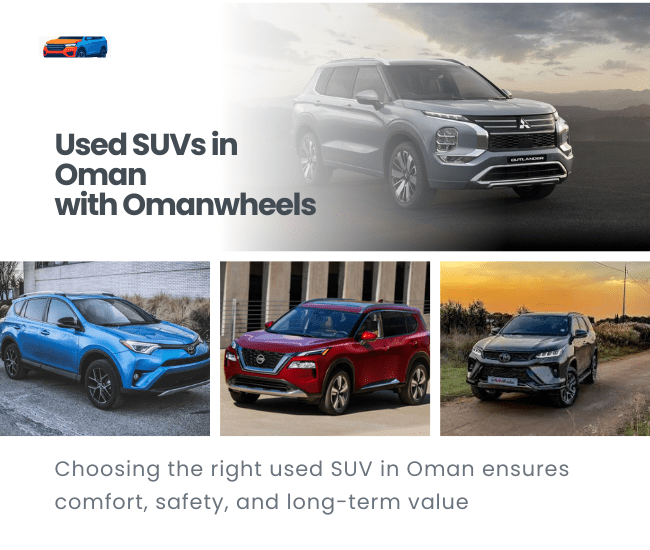
Oman Used SUVs 2026
Used SUVs in Oman – Best Models for Family & Daily Use (2026) SUVs remain [...]