
Oil Shipping Risks and Fuel Prices: What Oman Drivers Should Expect
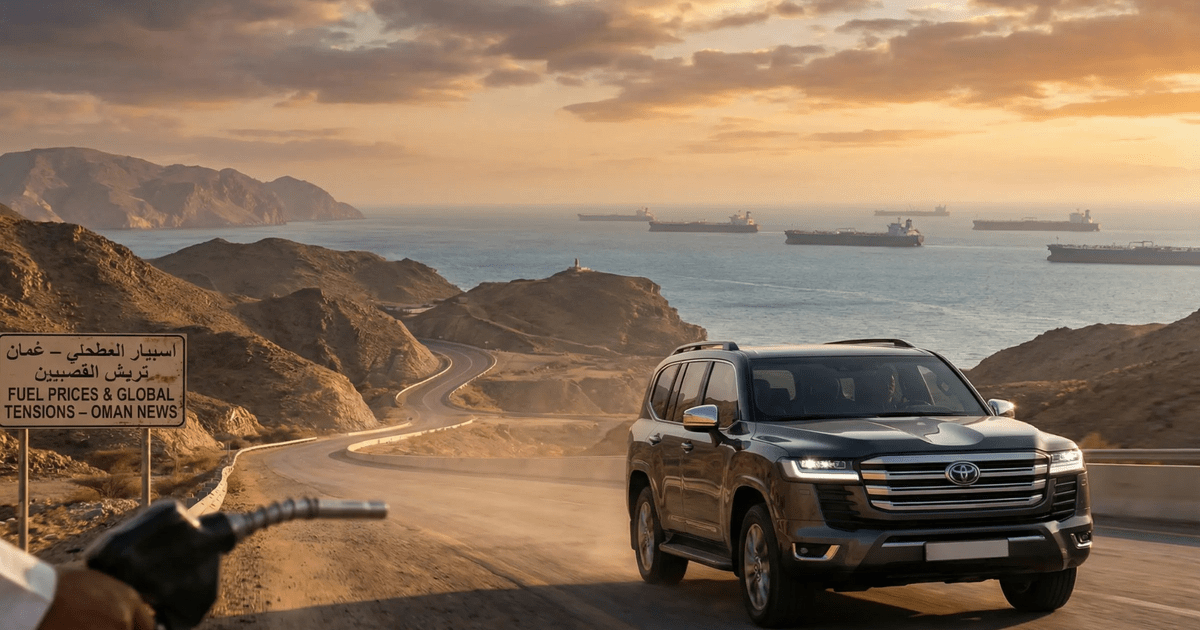
Will Rising Oil Tensions Near the Strait of Hormuz Affect Fuel Prices for Drivers in Oman?
Published: 2026 | OmanWheels Market Analysis
Recent geopolitical developments in the Middle East have once again brought global attention to one of the world’s most critical energy routes — the Strait of Hormuz. As tensions rise near this strategic waterway, many drivers across the Gulf are asking an important question: will rising oil tensions near the Strait of Hormuz affect fuel prices for drivers in Oman?
For motorists, logistics companies, and car buyers in the Sultanate, petrol price fluctuations can have a direct impact on transportation costs, vehicle demand, and even the used car market. This detailed market analysis explores the strategic importance of the strait, potential risks to global oil supply, and what Omani drivers should expect in the coming months.
Why the Strait of Hormuz Is Critical for Global Oil Supply
The Strait of Hormuz is one of the most strategically important shipping routes in the world. Located between Oman and Iran, the narrow channel connects the Persian Gulf with the Gulf of Oman and the Arabian Sea. Every day, massive oil tankers travel through this corridor carrying crude oil from Gulf producers to markets in Asia, Europe, and North America.
Energy analysts estimate that nearly 20% of the world’s petroleum supply passes through the Strait of Hormuz. This means any disruption — even temporary — could affect global oil prices almost immediately.
For countries such as Saudi Arabia, Kuwait, Iraq, and the United Arab Emirates, the strait is a key export route. If shipping is delayed due to military tensions, insurance risks, or naval activity, global energy markets react quickly.
These developments directly influence global oil shipping risks in the Strait of Hormuz, which can ultimately affect petrol prices for drivers across the GCC, including Oman.
Recent Geopolitical Tensions Affecting Shipping Routes
Over the past year, several geopolitical events have heightened concerns about shipping safety in the region. Increased naval patrols, political disputes, and regional conflicts have led shipping companies and insurers to reassess risk levels in the Gulf.
When risks increase, maritime insurance premiums also rise. Tanker operators often pass these costs to buyers in the form of higher oil transportation fees.
These developments contribute to a growing concern among economists regarding how Middle East geopolitical tensions influence global oil transportation. Even minor disruptions can ripple across global energy markets and eventually impact fuel prices for consumers.
Shipping analysts note that alternative routes for oil exports are limited. While pipelines and other routes exist, none match the volume capacity of the Strait of Hormuz.
As a result, any prolonged tension can push international oil prices upward, affecting countries that rely heavily on imported or globally priced fuel products.
Could Petrol Prices in Oman Increase?
Oman adjusts domestic fuel prices based on international oil benchmarks and regional economic factors. This means that global oil market fluctuations can directly influence what drivers pay at petrol stations.
If tensions near the strait disrupt shipping or raise crude prices, the impact could appear in local fuel pricing updates. Energy economists monitoring the region suggest that petrol price outlook in Oman during global oil supply disruptions depends heavily on international crude oil prices.
While Oman’s government often moderates sudden price increases to stabilize the economy, prolonged market pressure can still lead to gradual price adjustments.
Example Fuel Price Comparison
| Fuel Type | Average Price Before Tensions | Possible Price Range if Oil Rises |
|---|---|---|
| M91 Petrol | 0.229 OMR | 0.240 – 0.255 OMR |
| M95 Petrol | 0.239 OMR | 0.250 – 0.265 OMR |
| Diesel | 0.258 OMR | 0.270 – 0.285 OMR |
*Estimates based on regional energy market trends.
How Higher Fuel Prices Affect Car Owners in Oman
Fuel price changes can significantly impact the daily budget of drivers. For commuters who travel long distances between cities like Muscat, Sohar, and Salalah, even small increases in petrol costs can add up quickly.
When fuel prices rise, drivers often begin reconsidering vehicle choices. Analysts observe that how rising petrol prices influence used car demand in Oman is closely linked to fuel efficiency.
For example, smaller sedans and hybrid vehicles tend to become more popular when petrol becomes expensive, while large V8 SUVs may see slower demand in the used car market.
At the same time, businesses that rely heavily on transportation — such as delivery companies and taxi operators — may adjust pricing or fleet choices to offset fuel costs.
Drivers looking to buy fuel-efficient vehicles often explore listings on platforms such as Used Cars in Oman to compare models and running costs.
Impact on the Used Car Market in Oman
The used car market is highly sensitive to fuel price trends. When petrol becomes expensive, the demand for economical vehicles tends to rise rapidly.
Industry data shows that fuel-efficient used cars demand in Oman during petrol price increases often favors models like compact sedans, hybrid cars, and smaller SUVs.
Buyers may also consider vehicles with lower engine displacement, improved fuel economy, or hybrid powertrains. These shifts can change market trends for several months.
Market analysts tracking the Oman used car market trends during fuel price fluctuations note that resale values of fuel-efficient cars typically improve during periods of high oil prices.
Drivers interested in exploring market options can check listings and dealer directories such as car dealers and showrooms in Oman.
Estimated Fuel Cost Impact for Drivers
To understand how petrol price increases affect daily drivers, consider the following example of a typical monthly fuel cost comparison.
| Vehicle Type | Average Monthly Fuel Cost (Current) | Estimated Cost if Prices Rise |
|---|---|---|
| Compact Sedan | 35 OMR | 42 OMR |
| Mid-Size SUV | 65 OMR | 78 OMR |
| Large 4×4 SUV | 95 OMR | 115 OMR |
Simple Fuel Price Trend Visualization
Fuel Saving Tips for Drivers in Oman
While global energy markets are unpredictable, drivers can still take practical steps to reduce fuel consumption. Experts recommend several strategies that can help motorists manage expenses during periods of higher petrol prices.
1. Maintain Proper Tire Pressure
Under-inflated tires increase rolling resistance, forcing the engine to work harder. Maintaining correct tire pressure can improve fuel efficiency by several percent.
2. Avoid Aggressive Driving
Rapid acceleration and sudden braking consume more fuel. Smooth driving habits can significantly reduce petrol consumption.
3. Reduce Excess Weight
Carrying unnecessary cargo increases fuel usage. Removing heavy items from the vehicle can improve efficiency.
4. Consider Fuel-Efficient Vehicles
Drivers planning to change vehicles may consider fuel-efficient models available on platforms like OmanWheels car marketplace.
5. Plan Trips Efficiently
Combining errands into a single trip reduces total driving distance and fuel usage.
Market Outlook for 2026
Energy analysts believe that oil prices will remain sensitive to geopolitical developments in the Middle East. While global markets have adapted to previous disruptions, the strategic importance of the Strait of Hormuz means that tensions in the region will always influence energy markets.
The key factor for drivers is whether shipping disruptions become long-term. Short-term tensions may cause temporary price fluctuations, but prolonged instability could lead to sustained increases in oil and petrol prices.
Experts monitoring the future fuel price outlook for drivers in Oman amid global oil market volatility suggest that vehicle buyers should prioritize efficiency, reliability, and lower running costs.
Conclusion
The Strait of Hormuz remains one of the world’s most critical energy corridors. Any geopolitical tensions in this region can quickly influence global oil markets and potentially affect fuel prices in the Gulf.
While it is difficult to predict exact petrol price changes, the possibility of higher oil prices means drivers in Oman should stay informed and consider fuel-efficient transportation options. Monitoring global energy developments and making smart vehicle choices can help reduce the impact of rising fuel costs.
For the latest updates on the car market and fuel trends, explore guides and listings on OmanWheels, where drivers can track vehicle prices, dealer listings, and automotive market insights across the Sultanate.
Related Post