
Muscat Metro is Coming: Will It Reduce Traffic or Change the Way Oman Drives?
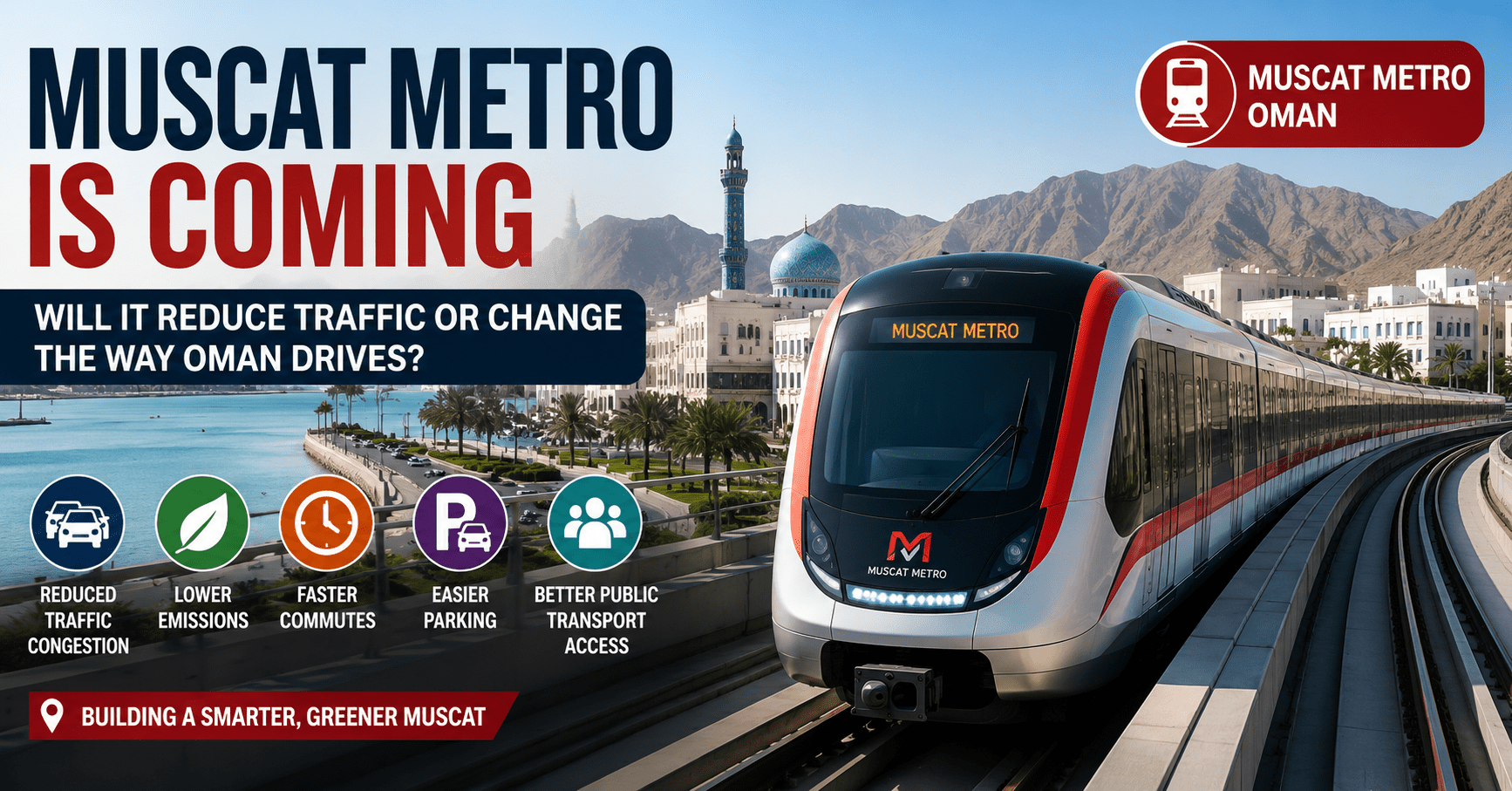
For decades, Muscat has been a city built around the private car. Wide highways, expanding residential communities, and growing commercial districts have made driving the preferred mode of transport for thousands of residents and visitors every day. As Oman continues to invest in modern infrastructure and sustainable urban development, discussions surrounding the proposed Muscat Metro have gained significant attention. Get Read fuel price cost in Oman.
Although the project remains part of the country’s long-term transportation vision, the idea of introducing a metro system has sparked conversations among motorists, commuters, businesses, and urban planners alike. If implemented, the Muscat Metro could transform the way people travel across the capital, reduce dependence on private vehicles, and reshape daily commuting habits.
But the biggest question remains:
Will the Muscat Metro actually reduce traffic, or will it simply change how people move around the city?
A New Chapter for Public Transportation
Muscat has experienced remarkable growth over the last two decades. The city’s population has increased steadily, with new residential areas stretching further from the traditional city centre. Commercial hubs, shopping malls, educational institutions, and business districts continue to expand, bringing more vehicles onto the roads every year.
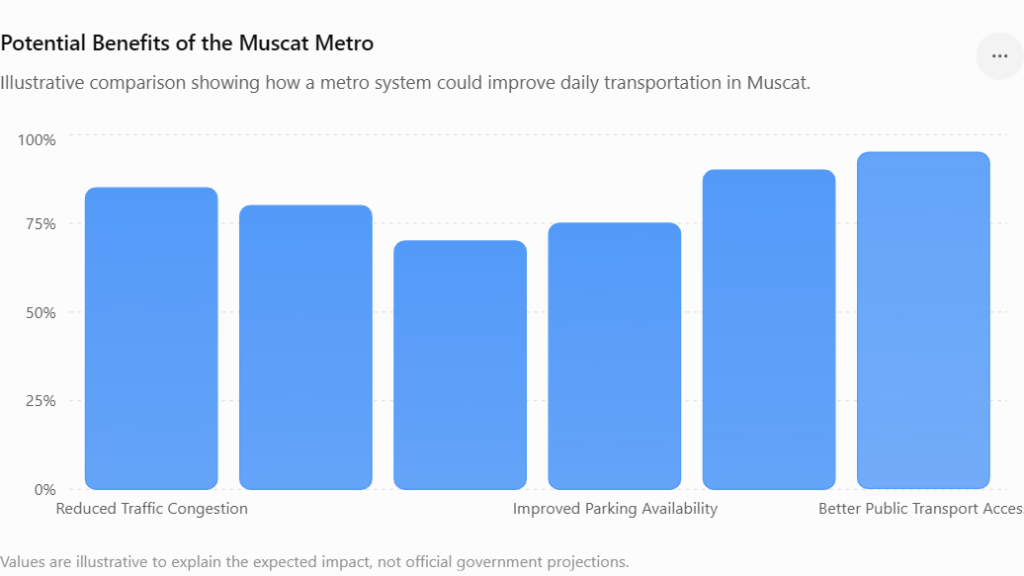
A modern metro network could significantly improve urban mobility by reducing road congestion, shortening commute times, easing parking demand, lowering fuel consumption, cutting emissions, and providing residents with a reliable alternative to driving. This chart is an editorial illustration and not based on official government projections.
During morning and evening rush hours, several major roads experience heavy congestion as thousands of commuters travel between home and work.A metro Oman system has long been viewed as one possible solution to support future urban growth while offering residents an alternative to driving.Unlike buses, which share road space with other vehicles, metro systems operate on dedicated tracks, allowing passengers to travel without being affected by traffic congestion.
For many global cities, introducing metro services has dramatically improved commuting efficiency.
Why Is Muscat Considering a Metro?
Oman’s long-term development plans focus on creating smarter, more sustainable cities while improving quality of life.
A metro system could help achieve several important goals:
- Reduce traffic congestion
- Lower carbon emissions
- Improve public transportation
- Support economic development
- Encourage sustainable urban planning
- Connect key residential and commercial districts
- Reduce travel times during peak hours
As Muscat continues to grow, transportation infrastructure will play an increasingly important role in maintaining mobility across the city.
How Would Drivers Benefit?
Many motorists initially worry that a metro system could increase road construction or reduce road space.However, experiences from cities around the world suggest the opposite often happens after a metro network becomes operational.
Less Congestion
If even a small percentage of commuters switch from private vehicles to public transport, thousands of cars could be removed from Muscat’s roads every day.That means:
- Faster journeys
- Shorter traffic queues
- Less stop-and-go driving
- Reduced stress during peak hours
Drivers who continue using their cars may actually experience smoother traffic conditions.
Easier Parking
Finding parking in busy commercial areas can sometimes be challenging, especially during weekends or major shopping periods.A metro system could encourage many visitors to leave their vehicles at designated park-and-ride facilities before completing their journey by train.This would reduce pressure on city-centre parking areas and make parking more accessible for those who still choose to drive.
Lower Fuel Costs
Traffic congestion leads to higher fuel consumption.Frequent acceleration, braking, and idling waste fuel and increase vehicle operating costs.If metro services reduce congestion, drivers may notice:
- Improved fuel efficiency
- Lower monthly fuel expenses
- Reduced wear on engines and brakes
Even small improvements in average travel speed can translate into meaningful savings over time.
A Better Daily Commute
For office workers travelling the same route every day, commuting can consume several hours each week.With a reliable metro network, some commuters may choose to leave their cars at home altogether.Instead of concentrating on traffic, they could spend commuting time reading, working remotely, or simply relaxing.This shift could improve work-life balance for many residents.
Environmental Benefits
Transportation is one of the largest contributors to urban emissions worldwide.Every private vehicle removed from the road helps reduce:
- Carbon dioxide emissions
- Air pollution
- Fuel consumption
- Noise pollution
Oman has increasingly focused on environmental sustainability as part of its broader development strategy.Cleaner public transportation supports these national objectives while improving urban air quality.
What Could the Metro Connect?
Although official routes have not been confirmed, discussions often focus on connecting major residential, commercial, and business districts.Potential connections could include:
- Central Muscat
- Government offices
- Business districts
- Shopping destinations
- Universities
- Residential communities
- Airport connections
- Future urban developments
An integrated transport network could eventually work alongside buses, taxis, and other mobility options.
Benefits for Businesses
- Improved transportation rarely benefits only commuters.
- Businesses often experience positive effects as well.
- Better accessibility can increase customer visits to shopping centres, restaurants, and entertainment venues.
- Employees may arrive more consistently and spend less time commuting.
- Property developments near metro stations often become attractive locations for offices, retail businesses, and residential projects.
- This can stimulate investment and create new economic opportunities.
Tourism Could Receive a Boost
- Muscat attracts visitors from around the world.
- For tourists unfamiliar with local roads, public transportation provides an easier way to explore the city.
- A metro could simplify travel between hotels, shopping centres, attractions, and transport hubs.
- Visitors may spend less time arranging transportation and more time enjoying their stay.
- Improved mobility can contribute positively to the overall tourism experience.
Challenges Ahead
Every major infrastructure project brings challenges.Building a metro system requires significant investment, long-term planning, and careful coordination.Construction may temporarily affect traffic in certain areas.Authorities would also need to consider:
- Population growth forecasts
- Passenger demand
- Station locations
- Integration with existing transport
- Long-term maintenance
- Operational efficiency
Successful metro systems depend not only on engineering but also on public acceptance and consistent usage.
Will People Leave Their Cars?
Perhaps the biggest challenge is changing commuting habits.Many residents enjoy the convenience and flexibility of driving.For a metro to succeed, it must offer:
- Reliable service
- Comfortable stations
- Affordable fares
- Convenient schedules
- Safe travel
- Easy connections
If public transport becomes faster than driving during rush hour, many commuters may naturally choose it.
Learning from Other Cities
Many rapidly developing cities once relied almost entirely on private vehicles.After introducing metro systems, they experienced:
- Reduced traffic congestion
- Increased public transport usage
- Better urban mobility
- Lower emissions
- Faster commuting
While every city is unique, these examples demonstrate how modern rail systems can complement road networks rather than replace them.
The Future of Driving in Muscat
- Contrary to popular belief, the Muscat Metro would not eliminate the need for cars.
- Instead, it could create a more balanced transportation system.
- Families would still drive for shopping, weekend trips, and destinations not directly served by public transport.
- Businesses would continue relying on commercial vehicles for deliveries.
- Emergency services would continue using the road network.
- The metro would simply provide another option—particularly for routine daily commuting.
A Smarter Transport Network
Modern cities increasingly rely on multiple transportation options working together.A future mobility ecosystem could include:
- Metro services
- Public buses
- Taxis
- Ride-hailing services
- Cycling infrastructure
- Walking-friendly neighbourhoods
- Park-and-ride facilities
The goal is not to replace private vehicles but to reduce unnecessary road congestion by giving residents more choices.
What Does This Mean for Oman?
Infrastructure projects often reflect a nation’s long-term ambitions.A metro system represents more than trains and stations—it signals confidence in future growth, economic diversification, and sustainable urban planning.For Oman, such developments align with broader efforts to modernise infrastructure while supporting a high quality of life for residents.
Whether commuting to work, attending university, shopping, or travelling to the airport, improved transportation options can make everyday life more convenient.
Final Thoughts
The Muscat Metro remains one of the most talked-about transportation concepts in Oman. While timelines and implementation details continue to evolve, the discussion itself highlights the growing importance of sustainable urban mobility.
If developed, the metro has the potential to reshape daily life by easing traffic congestion, improving commuting efficiency, supporting businesses, and reducing environmental impacts. For drivers, this does not necessarily mean giving up their cars—it means having a practical alternative when travelling through the busiest parts of the city.
As Muscat continues to expand, investing in a balanced transport system that combines roads, buses, taxis, and rail could help create a more connected and efficient capital. Whether you are a daily commuter, a business owner, or someone who enjoys exploring the city, the arrival of a metro could mark the beginning of a new era in Oman’s transportation landscape.
The question is no longer whether Muscat needs smarter mobility solutions—it is how those solutions will shape the future of driving, commuting, and urban living for generations to come.
Related Post
Best Car Coverage Insurance in Oman 2026
Best Car Coverage Insurance in Oman 2026 – Complete Guide Choosing the right car insurance [...]
Petrol Prices Increase Again in April 2026
Fuel Price Alert in Oman: Will Petrol Prices Increase Again in April 2026? Fuel Price [...]