
Heavy Rain & Storm Alert in Oman
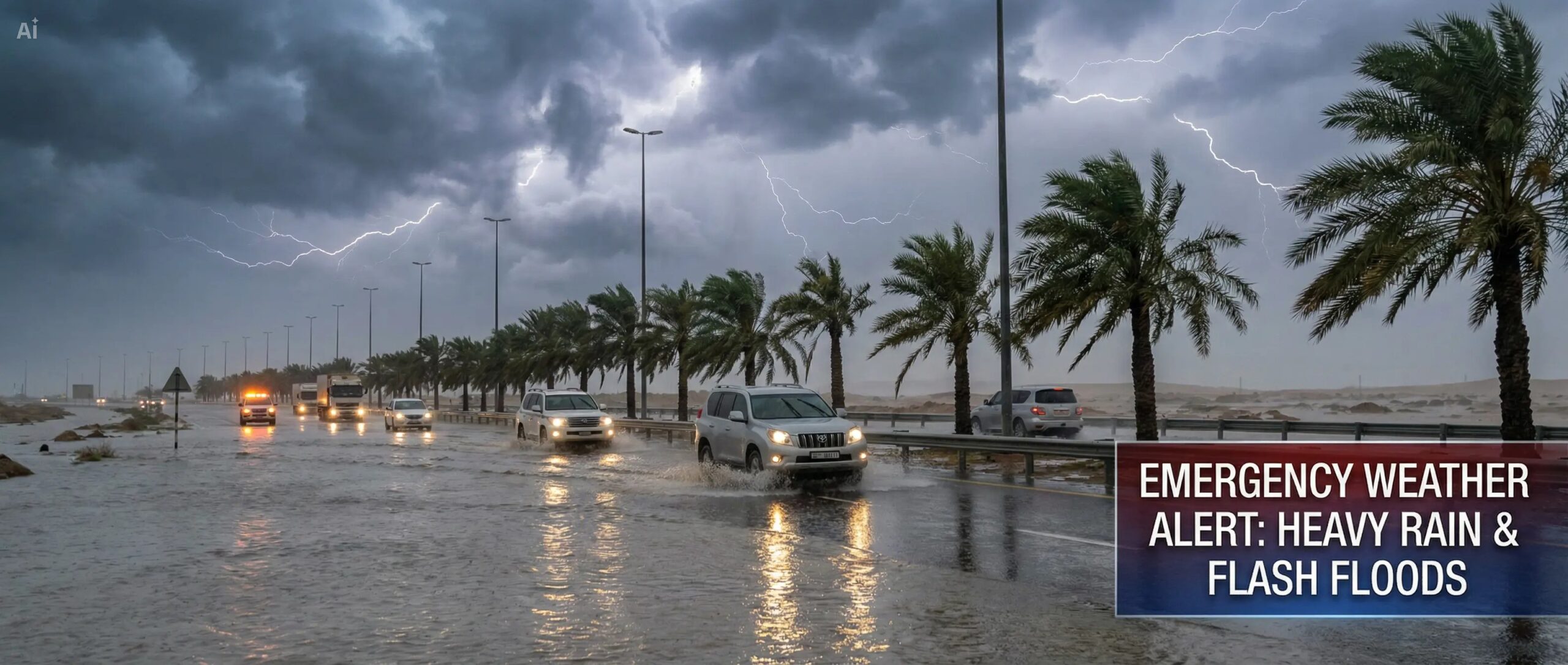
Heavy Rain & Storm Alert in Oman: How to Drive Safely During Extreme Weather
Oman is currently experiencing unstable weather conditions, with thunderstorms, heavy rainfall, and strong winds affecting multiple regions. Authorities have issued alerts warning drivers about hazardous road conditions, reduced visibility, and the increasing risk of flash floods in wadis and low-lying areas. These weather patterns can quickly turn normal driving conditions into dangerous situations, especially for unprepared motorists. Oil price Updates in Oman
According to recent weather alerts, rainfall in some areas can reach between 60–200 mm, significantly increasing the risk of sudden flooding and road hazards.Therefore, understanding how to drive safely during heavy rain and storms in Oman is essential for every driver.
Current Weather Situation in Oman (2026)
The Sultanate is seeing widespread cloud activity, thunderstorms, and rainfall across regions such as Muscat, Al Batinah, Al Dakhiliyah, and Al Sharqiyah. Strong downdraft winds and lightning storms are also being reported, creating additional risks for drivers.
Weather authorities have highlighted three major risks:
- Flash floods in wadis and valleys
- Reduced road visibility during storms
- Slippery roads affecting braking and control
Flash Flood Warning: The Hidden Danger of Wadis
One of the biggest dangers during heavy rain in Oman is the sudden formation of flash floods in wadis. These floods can occur within minutes, even if rainfall appears moderate.
Why Wadis Are Dangerous
- Water levels rise rapidly without warning
- Strong currents can sweep away vehicles
- Roads near wadis may collapse or flood
Authorities strongly advise drivers to never attempt to cross flowing water, as even shallow-looking water can hide strong currents.Impact of war on Oman
Flash Flood Risk Levels
| Rainfall Level | Risk Level | Driving Condition |
|---|---|---|
| 10–30 mm | Moderate | Slippery roads, minor flooding |
| 30–80 mm | High | Wadis start flowing, road hazards |
| 60–200 mm | Severe | Flash floods, road closures |
Tire Grip & Braking Tips During Heavy Rain
Wet roads significantly reduce tire grip, making braking distances longer and increasing the risk of skidding. Drivers must adjust their driving style immediately during rain.
Key Tire Safety Tips
- Check tire tread depth regularly
- Maintain proper tire pressure
- Avoid worn-out or old tires
Safe Braking Techniques
- Brake gently and gradually
- Increase following distance
- Avoid sudden stops
Hydroplaning is a common issue where tires lose contact with the road surface. If this happens, drivers should:
- Ease off the accelerator
- Keep steering steady
- Avoid sudden braking
Visibility Driving Tips During Storms
Heavy rain and thunderstorms often reduce visibility to dangerous levels. Dust, mist, and water spray from other vehicles can make it difficult to see clearly.
How to Improve Visibility
- Turn on headlights (low beam)
- Use windshield wipers at proper speed
- Keep windshield clean inside and outside
Driving in Low Visibility
- Reduce speed significantly
- Maintain safe distance
- Avoid overtaking
In extreme conditions, it is safer to pull over in a secure location rather than continue driving.
Safe Driving Tips During Heavy Rain in Oman
To stay safe on Oman’s roads during storms, drivers should follow these essential guidelines:
- Drive slowly and cautiously
- Avoid flooded roads and wadis
- Keep both hands on the steering wheel
- Stay updated with weather alerts
- Use hazard lights if necessary
Additionally, avoid driving through areas known for water accumulation, such as underpasses and low-lying streets.
Common Driving Mistakes During Rain
- Driving too fast on wet roads
- Ignoring flood warnings
- Using high beam lights in rain
- Sudden braking or sharp turns
Avoiding these mistakes can significantly reduce accident risks.
Impact of Heavy Rain on Roads in Oman
| Condition | Impact |
|---|---|
| Heavy Rain | Reduced traction and visibility |
| Flooded Roads | Vehicle damage and stalling |
| Strong Winds | Loss of control, debris hazards |
| Thunderstorms | Sudden weather changes and panic driving |
Pro Tips for Driving in Extreme Weather
- Always check weather forecast before travel
- Keep emergency kit in your car
- Avoid mountain and desert routes during storms
- Park vehicles in safe, elevated areas
Emergency Checklist for Drivers
- Flashlight
- First aid kit
- Phone charger
- Emergency contact numbers
Conclusion
Heavy rain and storm alerts in Oman highlight the importance of safe driving practices during extreme weather. With increasing risks of flash floods, reduced visibility, and slippery roads, drivers must remain alert and prepared.
By following proper safety guidelines, maintaining vehicles, and avoiding risky areas like wadis, motorists can significantly reduce the dangers associated with severe weather conditions. Staying informed and cautious is the key to safe driving in Oman during storms.
Related Post

Honda Cars in Oman – Reliable Models, Prices & Ownership Guide 2026
As consumers continue to place a high value on dependability, fuel economy, and reasonably priced [...]
Used Suzuki Cars Price In Oman
Used Suzuki Cars Price in Oman 2026 – Complete Market Guide | OmanWheels OmanWheels › [...]